Taekwondo Mats vs Karate Mats: Surface, Grip, and Training Use
Taekwondo mats and karate mats look similar from across the room — both are foam, both come in tiles — but they’re engineered around different movement priorities. Taekwondo mats favor a slightly textured, higher-rebound surface that cushions jump kicks and spinning techniques, while karate mats favor a firmer surface with controlled friction that lets fighters pivot fast without excessive drag. Pick the wrong one and you either kill your students’ pivot speed or leave them landing hard on a surface that’s too slick for kicking drills.
Why Surface Texture Is the Real Dividing Line
Here’s a mistake a lot of buyers make: they compare mats by thickness alone and ignore texture. Big error. Texture determines how a foot behaves on contact — and that’s everything in striking sports.
Taekwondo relies heavily on pivoting kicks, jump-spinning techniques, and rapid footwork resets. A mat with too much grip catches the foot mid-pivot and torques the knee or ankle. That’s why most taekwondo-grade mats use a light stipple or matte texture — enough grip to prevent slipping on landing, but not so much that a spinning back kick gets stuck halfway through rotation.
Karate, by contrast, is built on linear stances — zenkutsu-dachi, kokutsu-dachi — where the rear foot needs to slide slightly during a lunge punch or transition. A firm surface with controlled friction can improve footwork and technique execution here. Too much texture and karateka fight the floor instead of their opponent.
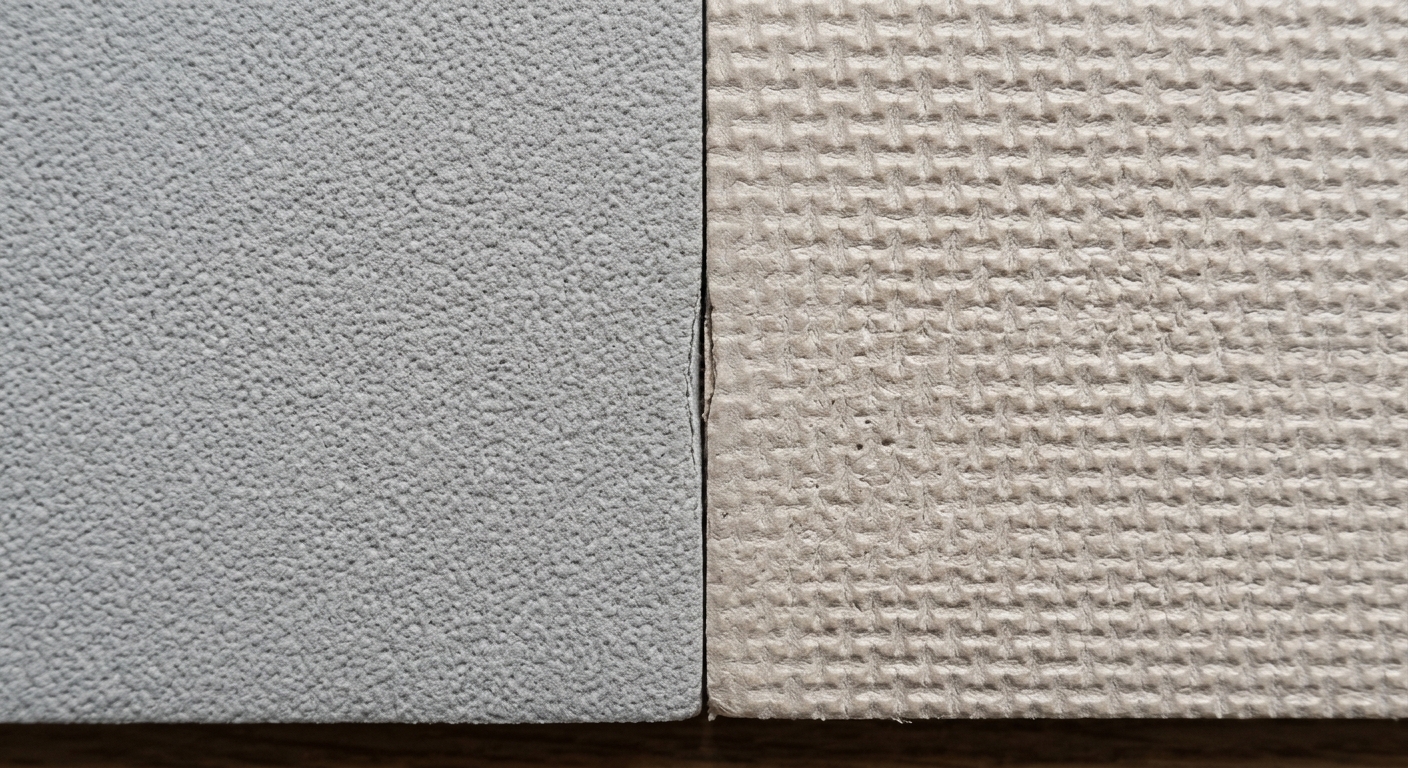
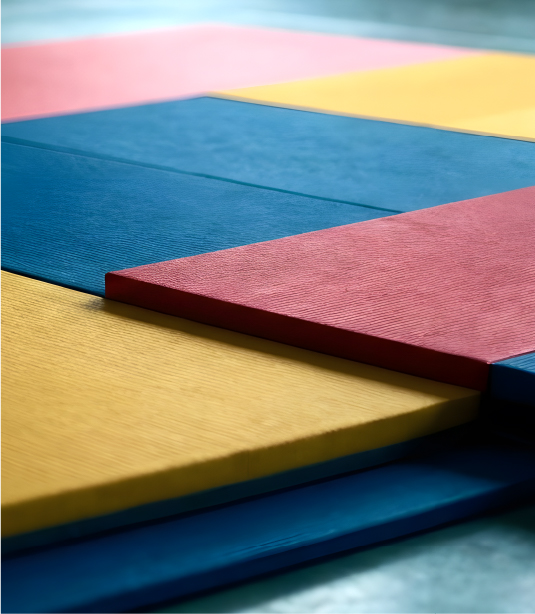
Macro comparison of stippled and smooth foam mat textures
Thickness: Why More Isn’t Always Better
A thicker taekwondo training mat can provide additional cushioning for jump-kick drills, but excessive softness may feel less stable for karate stance work. That’s the core tradeoff buyers miss.
Taekwondo athletes generate high vertical impact from jump spin kicks, tornado kicks, and board-breaking drills. Depending on the foam construction and intended use, taekwondo mats are available in different thicknesses, with thicker training mats providing additional cushioning for repeated jump and kicking drills. Going thinner does not automatically mean inadequate protection, because impact performance also depends on foam density, hardness, resilience, and the subfloor beneath the mat.
Karate training generates less vertical impact but demands more rotational stability. A mat over 30mm starts to feel spongy underfoot during stance work, which throws off balance-dependent techniques like sanchin dachi. Most commercial karate dojos land in the 20-30mm range, prioritizing firmness over cushioning.
Quick thickness rule of thumb
Taekwondo training: 20-30mm for many standard applications; thicker options may be selected when additional cushioning is required
Competition use: confirm the applicable federation and event requirements before selecting thickness
Traditional karate kata and kumite: 20-25mm
Mixed-use dojo (both styles): 25-30mm compromise
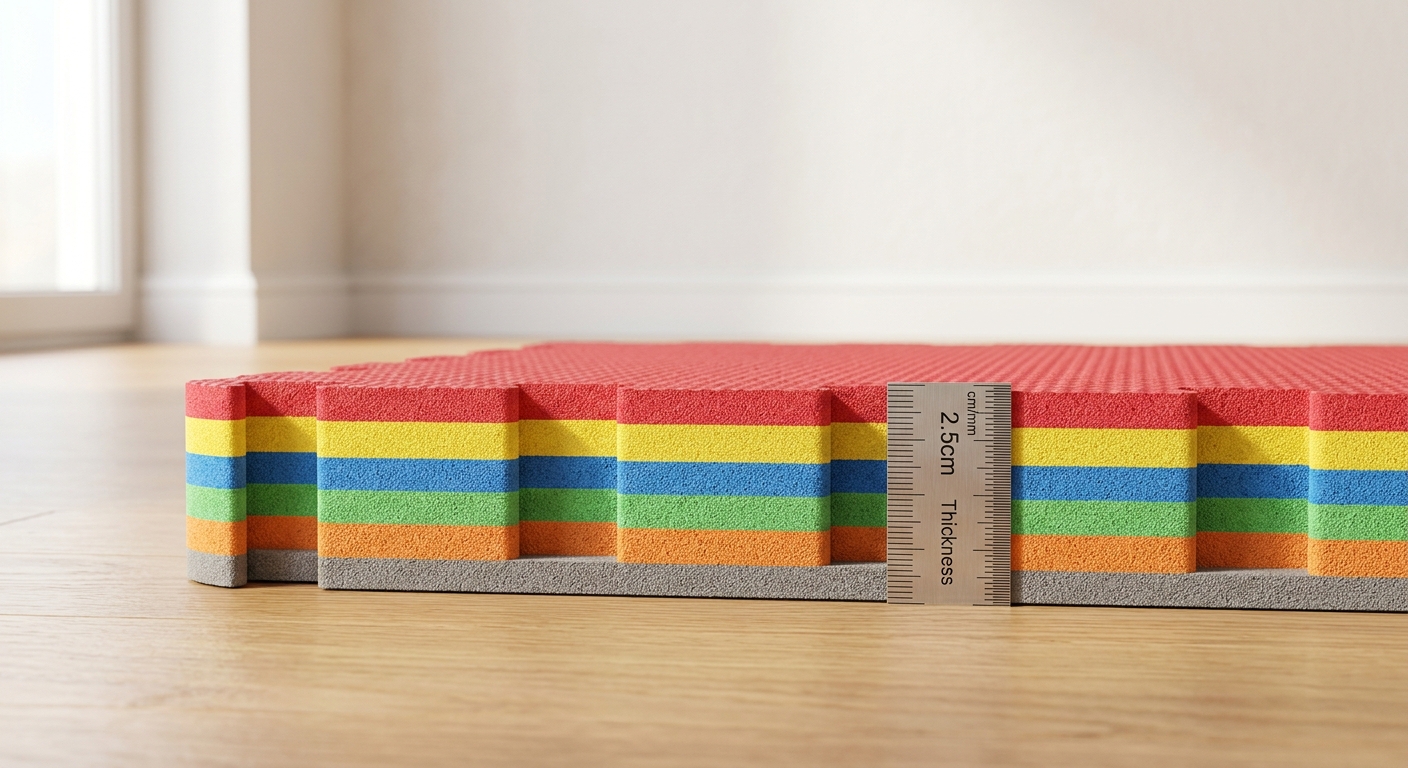
Cross-section view of layered foam training mat showing thickness
Grip vs Glide: A Real-World Example
A regional taekwondo academy in the Midwest once switched to a smooth vinyl-top mat to match their karate program’s floor — and within weeks, coaches noticed more ankle rolls during spinning kick drills. The smooth surface didn’t grip enough on landing. They swapped back to a stippled EVA tile with moderate texture, and the incident rate dropped noticeably the following month.
Contrast that with a karate dojo that kept a high-texture taekwondo-style mat for cost reasons. Students complained their front foot “stuck” during lunging techniques, throwing off timing in kumite sparring. The fix wasn’t fancy — they just needed the right surface for the movement pattern being trained.
The lesson: grip level isn’t a matter of preference, it’s a matter of biomechanics matching the sport.
Material Composition: EVA, XPE, and Vinyl-Top Builds
Not all foam is created equal, and the material underneath the surface layer matters as much as the top texture.
Most taekwondo mats use closed-cell EVA foam — lightweight, consistent density, and forgiving on repeated impact. Some martial arts mats also use XPE or other cross-linked polyethylene foam constructions to achieve different levels of firmness and resilience.
Karate mats may use EVA, cross-linked polyethylene foam, or other closed-cell foam constructions depending on the required firmness and surface performance, which resists compression from stance-heavy training and holds up better under sustained pressure from partner drills and grappling exchanges that sometimes bleed into karate curricula.
If your facility is sourcing in bulk, ask your supplier for the foam density spec (measured in kg/m³) rather than just “thickness.” A 30mm mat at 90kg/m³ behaves very differently than a 30mm mat at 150kg/m³.
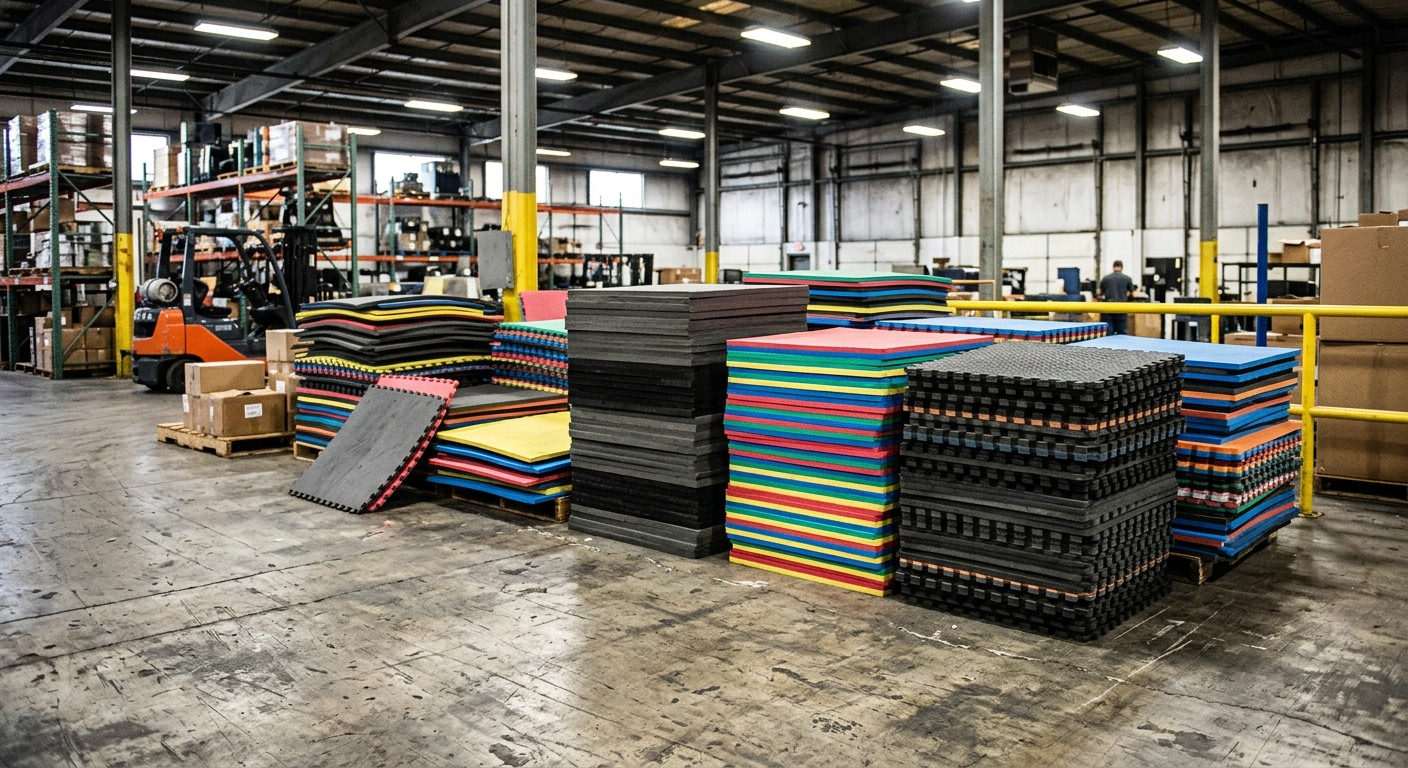
Stacked colored foam mat tiles of varying density in a warehouse
Edge Systems and Facility Layout Differences
Taekwondo dojangs almost always use interlocking puzzle-edge tiles because sparring rings need a seamless surface with zero trip hazards during fast footwork. A raised or uneven seam at speed is a real injury risk.
Karate dojos have more flexibility here. Depending on the training format and facility layout, some karate facilities may also use alternative modular mat systems, which are faster to install and reconfigure for different class sizes.
If you’re building a multi-discipline facility, this is worth discussing with your OEM/ODM manufacturing partner before ordering — custom edge profiles and interlocking patterns can be matched to your specific floor layout rather than forcing a one-size-fits-all tile.
Color, Branding, and Why It Matters Commercially
This one’s often an afterthought, but it shouldn’t be. Taekwondo competitions frequently follow color-coded zone standards (contest area vs. boundary vs. safety zone), while karate training facilities may use either single-color or contrasting-color layouts depending on branding, training use, and competition requirements.
For standard EVA interlocking mats, branding is usually achieved through color combinations and floor-layout design rather than surface printing. Schools can use contrasting mat colors to define training zones, borders, or designated practice areas while maintaining a consistent visual identity.
If a facility requires a printed academy logo or custom graphics, a PVC- or vinyl-covered mat system, such as an MMA or roll-out training mat, is generally a more suitable option because the surface layer can support custom printing. This distinction should be confirmed during product selection, especially for clubs planning a fully branded training area.
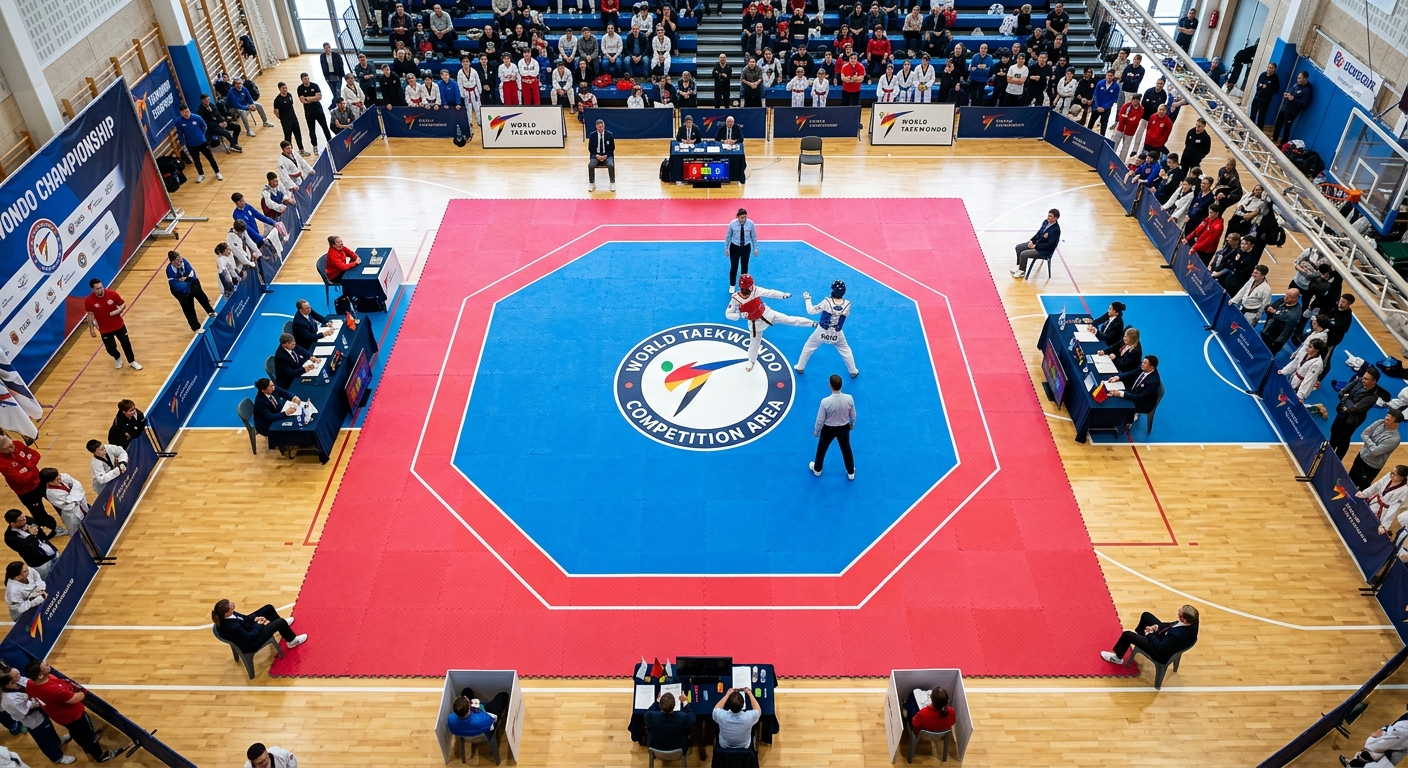
Custom branded competition-style taekwondo mat with logo zone
Maintenance and Lifespan Under Different Training Loads
Taekwondo mats take more point-impact stress from jump landings, which accelerates surface indentation near sparring zones. Rotating tiles periodically extends usable life and evens out wear patterns.
Karate mats endure more consistent shear stress from pivoting and sliding footwork, which wears the surface texture down over time rather than compressing it. Expect the top texture to smooth out faster on high-traffic karate mats — that’s your signal to plan replacement before grip performance drops below safe levels.
Commercial-grade EVA mats can provide years of service under regular use, but actual lifespan depends on training frequency, foam quality, maintenance, installation conditions, and wear level, less if the facility runs multiple classes per day, six days a week.

 Home Use Roll Up Wrestling Mat for Training and Practice