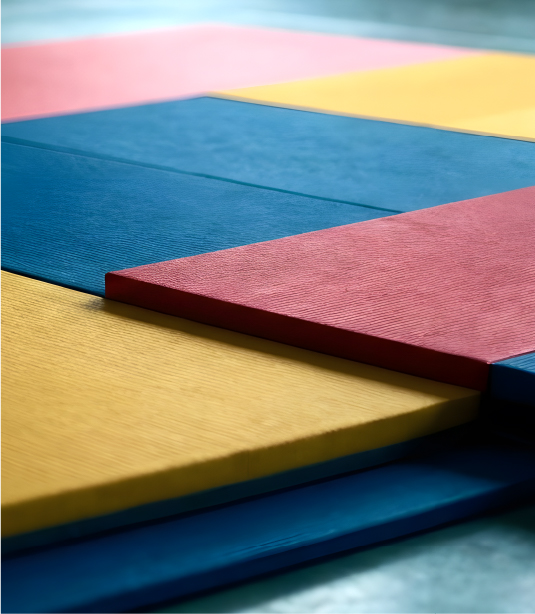
How to Clean Martial Arts Mats Without Damaging the Surface
Clean martial arts mats with a pH-neutral cleaner, a soft mop or microfiber cloth, and rinse with plain water if required by the cleaner’s instructions. Avoid harsh bleach, ammonia-based cleaners, and abrasive scrubbers unless specifically approved for the mat material. Always let the surface dry fully before stacking or rolling the mats back up. The right method depends on whether you have tatami, smooth PVC, or foam-core roll mats, since each reacts differently to moisture and chemicals. Get this wrong and you won’t just have a dirty mat, you’ll have a cracked, yellowed, or delaminating one well before its time.
Key takeaways
Use only pH-neutral cleaners or diluted mild soap, never bleach, ammonia, or steam cleaners on foam-core mats.
Dry sweep before every wet mop, since grit under a wet mop is the main cause of visible surface scratching.
Tatami, smooth PVC, and XPE-core roll mats each need brushing or wiping in a different direction and intensity based on their texture.
Never stack or roll mats while damp, and avoid direct sunlight drying for PVC to prevent UV-related cracking.
Persistent odor or worn-smooth anti-slip texture signals replacement time, not a need for harsher cleaning products.
Why Most Mat Damage Comes From the Cleaning Routine, Not the Training
Every gym owner assumes mats wear out from throws, drills, and bodyweight impact. That’s rarely the real story. Surface cracking, yellowing, and delamination can result from improper cleaning methods, as well as regular wear, environmental exposure, and material aging.
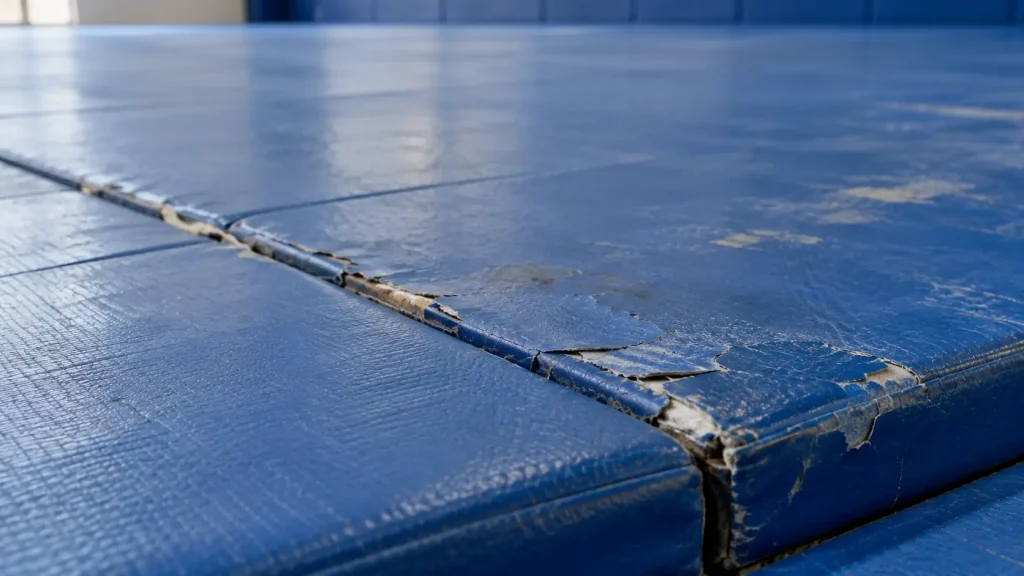
Harsh bleach and ammonia-based cleaners may damage certain PVC surfaces, potentially causing discoloration, stiffness, or premature aging over time. The mat looks clean right after mopping, but the chemical reaction is already underway underneath. Over weeks of repeated exposure, the surface stiffens, loses its give, and eventually cracks at stress points like seams and fold lines.
Abrasive scrub pads do similar damage from a different angle. They create micro-scratches you won’t notice at first glance, but those scratches trap bacteria and body oils, and they dull the anti-slip texture that’s supposed to keep athletes from sliding on takedowns.
Then there’s the quieter killer: trapped moisture. Water sitting between interlocking panels, or between the mat and subfloor, seeps into foam cores over time. That’s what causes the musty odor and soft spongy feel in older mats, not the training impact itself. A mat that gets mopped daily but never fully dries is often in worse shape than one cleaned less often but dried properly.
Cracked and discolored martial arts mat surface from chemical damage
What to Use: Safe Cleaners vs. Products That Will Ruin Your Mats
If your supply closet has bleach, ammonia, or a steam cleaner next to your mat cleaning gear, you’ve already got a problem waiting to happen. Here’s the quick reference for what belongs in your cleaning routine and what needs to go.
Stick with pH-neutral mat cleaners or a diluted mild soap solution. Water-based disinfectants labeled safe for PVC or rubber surfaces are fine for daily sanitizing. Everything else on the avoid list reacts chemically with the materials your mats are made from, even if the damage isn’t visible for weeks.
Tools matter as much as chemicals
A microfiber mop or soft-bristle brush lifts dirt and grit without grinding it into the surface. Stiff deck brushes and steel wool do the opposite: they physically wear down the texture that gives your mats their grip.
Cleaning by Mat Type: Tatami, Smooth PVC, and Foam-Core Roll Mats Need Different Handling
Treating every mat surface the same way is how facilities end up with uneven wear. Texture and core construction change what counts as safe cleaning.
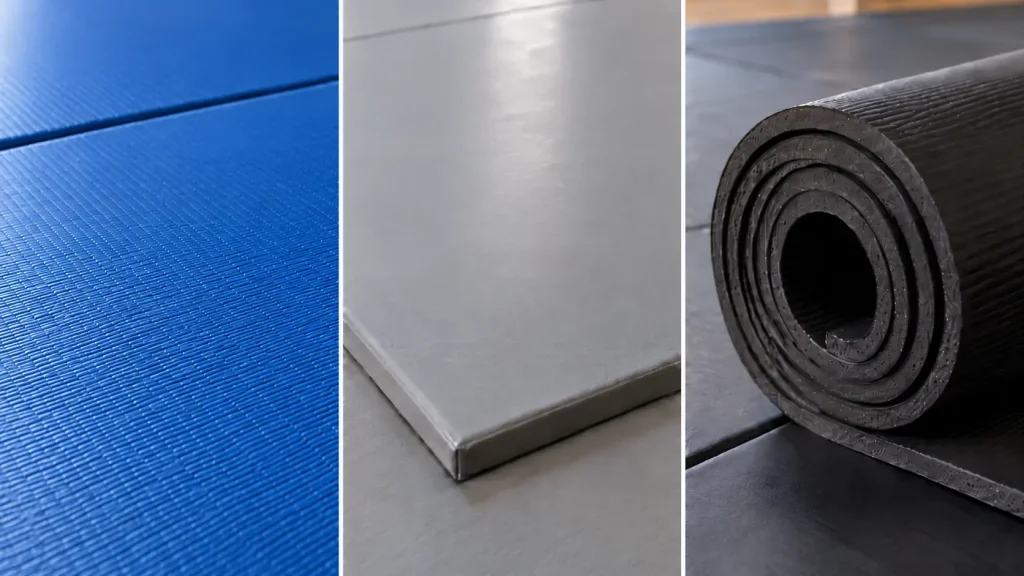
Tatami-textured mats: Dirt collects in the grooves between ridges. Use a soft brush to gently clean along the texture, avoiding excessive pressure or abrasive scrubbing that could damage the surface. If you’re deciding between textures in the first place, our guide on tatami vs. smooth surface judo mats covers how each holds up long-term.
Smooth PVC surface judo/taekwondo mats: These wipe down fast with a flat mop, but grit left on the surface before wiping can leave visible scratch trails. Dry sweep first, always.
XPE-core roll-out wrestling/MMA mats: Crosste’s MMA Training Mat uses custom-fit XPE roll mats, and the Home Use Roll Up Wrestling Mat follows a similar high-density XPE core design with a tear-resistant PVC skin. The skin wipes clean easily, but seams and edges need extra drying attention since moisture creeping into the foam core is what causes long-term odor and softening.
EPDM rubber gym flooring: Crosste’s gym flooring mats use durable EPDM rubber, which handles chemical exposure better than PVC but still degrades with petroleum-based solvents. Sweep grit before wet mopping to protect the surface from embedded scratching.
Comparison of tatami, smooth PVC, and foam roll mat textures
Daily Wipe-Down vs. Weekly Deep Clean: Building a Routine Staff Will Actually Follow
A one-time deep clean doesn’t protect a mat. Consistency does. Here’s a routine simple enough that staff will actually stick to it.
Daily, after each class
Dry sweep or dust mop first, every time. Grit left under a wet mop is what causes most visible surface scratching, so this step isn’t optional even if you’re in a rush.
Wipe away sweat promptly. For blood contamination, follow appropriate cleaning and disinfection procedures using a disinfectant approved for the mat surface, including the required dilution and contact time. Over-concentrated solutions are just as damaging as the wrong chemical entirely.
Weekly
Do a full wet mop with a pH-neutral cleaner, paying extra attention to seams and edges where interlocking panels meet. That’s where dirt and moisture accumulate fastest and where delamination usually starts.
Monthly
If your mats are liftable, check the underside for trapped moisture or early mold, especially in humid climates or ground-level facilities where airflow underneath is limited.
Drying and Storage Mistakes That Undo a Good Cleaning Job
You can do everything right with the cleaner and still ruin the mat at the drying stage. This is the step most gyms skip, and it’s where a lot of avoidable damage actually happens.
Never stack or roll mats while they’re still damp. Trapped moisture between layers creates the mildew smell and tacky surface feel that shows up weeks later, long after the cleaning itself.
Avoid drying PVC mats in direct sunlight. It feels efficient, but UV exposure accelerates fading and brittleness, which is the same end result as chemical damage from harsh cleaners. Air-dry indoors with good ventilation instead.
Rolled mats should be stored loosely, not compressed tightly. Tight rolling over time creates permanent creasing at fold lines that no amount of cleaning will fix.
Finally, check interlocking mat edges after cleaning and drying. Edges that warp from improper drying create small gaps, and those gaps are trip hazards, not just a cosmetic issue.
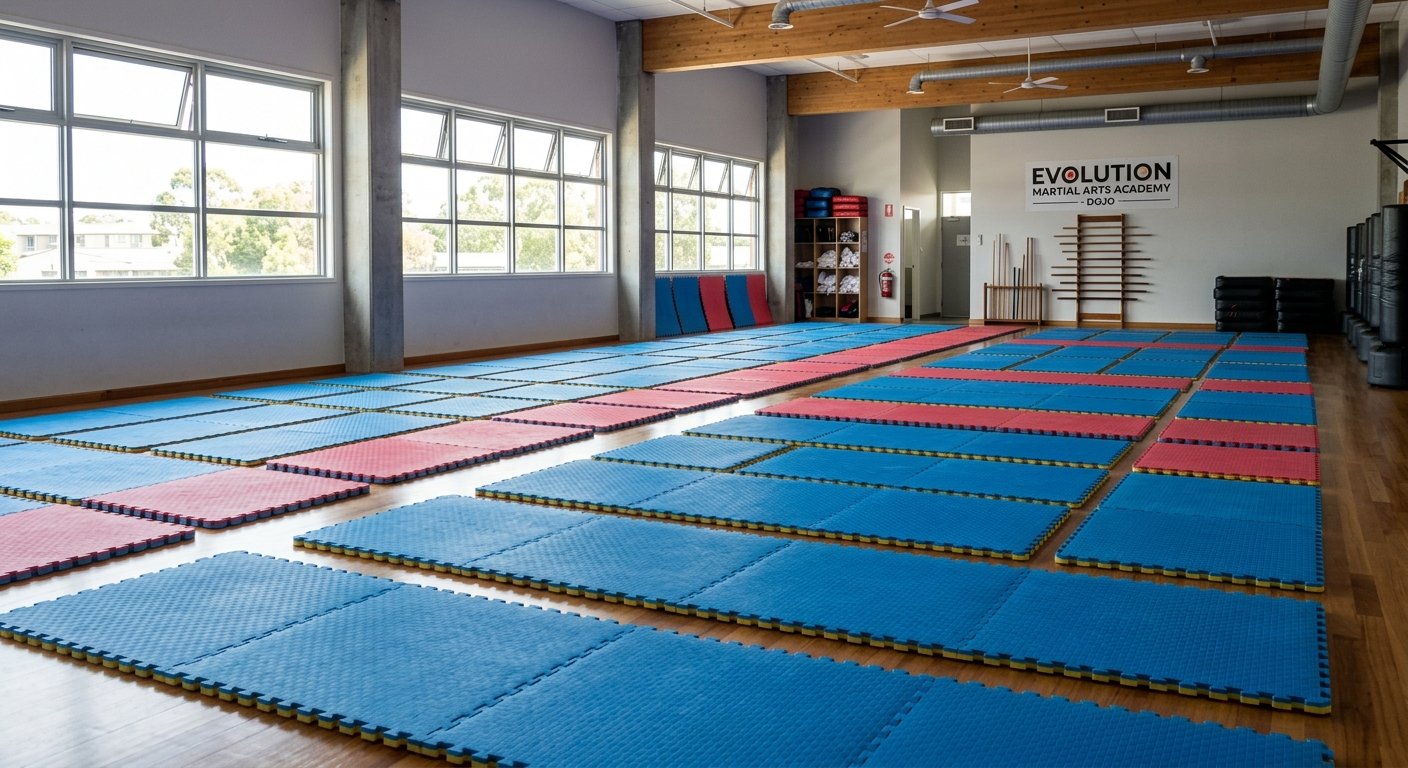
Martial arts mats air-drying flat in a ventilated gym space
When Cleaning Isn’t Enough: Signs It’s Time to Replace, Not Scrub Harder
Some problems aren’t a cleaning failure, they’re an end-of-life signal. Knowing the difference saves you from wasting time and product on a mat that needs replacing anyway.
Persistent odor after proper cleaning is a sign the core has already absorbed moisture beyond what surface cleaning can fix.
Surface cracking or peeling at seams is chemical or UV damage that’s already done. A stronger cleaner won’t reverse it, and in most cases will make it worse.
Anti-slip texture worn smooth in high-traffic zones is a safety issue, not a cosmetic one. If athletes are sliding on takedowns, that mat needs replacing regardless of how clean it looks.
If you’re replacing a mat, match the thickness and core type to the original installation to avoid uneven flooring transitions between old and new sections. For wrestling-specific layouts, our UWW wrestling mat dimensions guide is a useful reference when planning replacements.
Getting It Right From the Start: Cleaning Considerations When Sourcing Mats
The easiest way to simplify your cleaning routine long-term is choosing the right mat construction before installation, not after problems start.
When sourcing martial arts mats, buyers should review available material test reports and applicable compliance documentation, such as REACH, RoHS, or EN71 where relevant. Cleaning chemical compatibility should be confirmed separately based on the mat’s surface material and manufacturer’s recommendations.
Custom surface and core options also matter more than most buyers realize at purchase time. A tighter-weave tatami texture can make debris removal easier for facilities with limited cleaning staff, while sealed-seam roll mats hold up better in wet environments like basement-level gyms. Crosste provides custom specifications across size, surface, thickness, and core, so facilities can match mat construction to their actual cleaning capacity rather than adapting their routine to whatever mat they happened to buy.
Through the OEM/ODM process, buyers can discuss custom sizes, thicknesses, surface textures, colors, and core materials to meet their specific facility requirements. For facilities planning a new installation or replacement and weighing these options, our OEM & ODM page and full product range are a practical place to start the conversation.
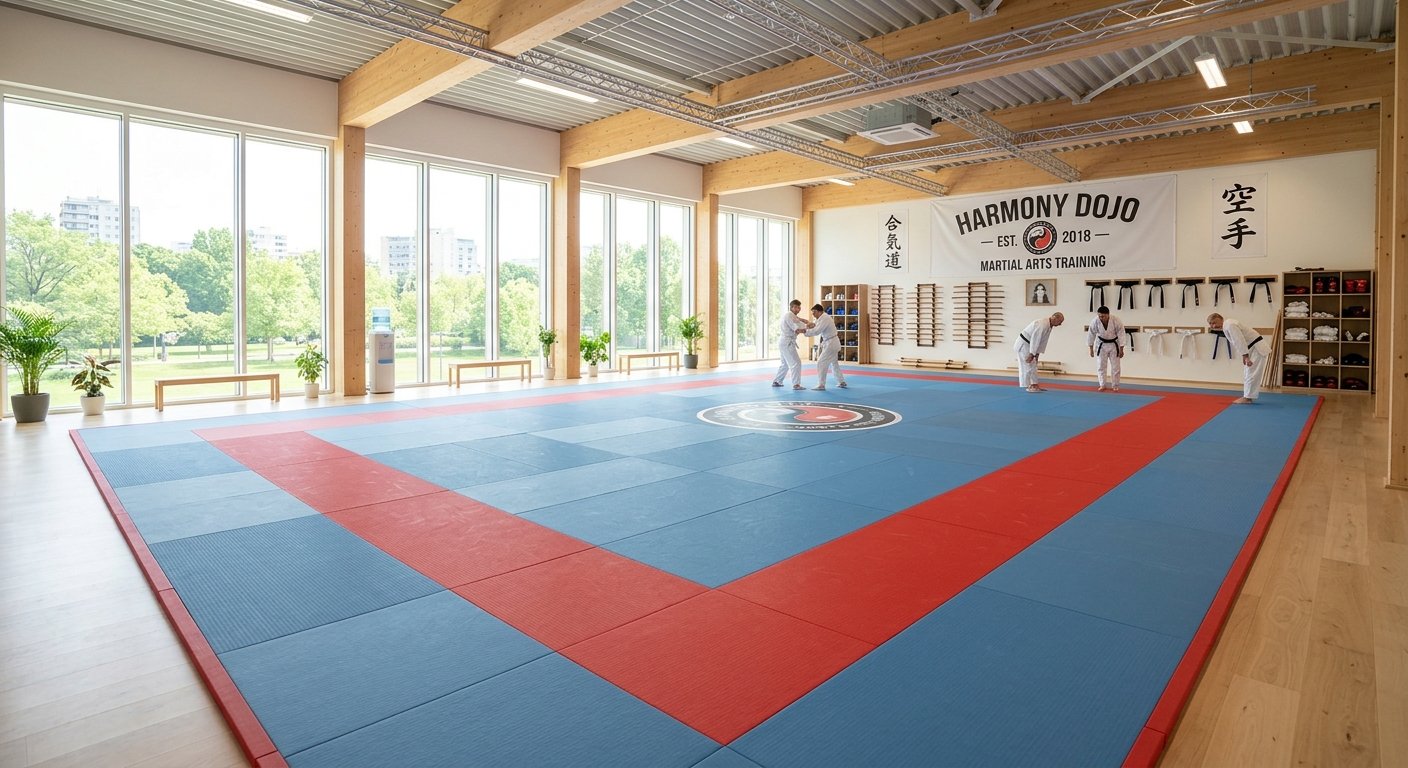
Seamless custom martial arts mat installation in a modern training facility
Frequently asked questions
Can I use a regular disinfectant spray on martial arts mats?
Only if it’s labeled safe for PVC or rubber surfaces and is water-based. Many common disinfectant sprays contain alcohol or ammonia compounds that dry out vinyl and accelerate brittleness over repeated use, so always check the label before spraying it directly on mat surfaces.
How often should martial arts mats be deep cleaned?
Daily surface cleaning is recommended, with periodic deep cleaning based on usage. Disinfection frequency should follow facility hygiene requirements, mat manufacturer guidance, and the disinfectant’s instructions. High-traffic academies may need to adjust frequency based on class volume and how quickly grit and sweat accumulate.

 Home Use Roll Up Wrestling Mat for Training and Practice